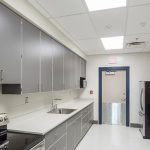
In high-traffic spaces like hospitals, commercial kitchens, schools, and facilities, walls take constant impact, spills, and repeated cleaning. When finishes start failing, it shows up as staining, peeling paint, crumbling grout and more downtime than anyone budgeted. Comparing hygienic wall cladding panels with tiles and paint is not just a design choice.
It is a decision about hygiene performance, lifecycle cost and how smoothly operations run. This blog looks at all three options with Kleenclad hygienic wall panels as the performance benchmark.
What are hygienic wall panels?
Hygienic wall panels are non‑porous, seam‑minimised cladding systems, usually PVC or similar, installed over a prepared substrate with sealed joints, coved skirtings and formed corners. The goal is to create a continuous, easy‑to‑clean surface that stands up to chemicals, moisture and impact.
In Kleenclad systems, integrated silver‑ion technology provides built‑in surface protection that helps reduce microbial load on the panel surface throughout product life. It is designed to complement, not replace, cleaning and disinfection.
Cleaning effort: daily work versus weekend repairs
With paint, every cleaning round slowly eats into the finish. Strong detergents and disinfectants cause softening, blistering and visible patchiness. Staff must scrub harder to remove stains, which accelerates wear. Tiles are better on the face, but grout lines collect grease, soap, food particles and skin oils. Getting grout visibly clean is labour-intensive and often needs periodic deep cleaning or regrouting.
Seam‑minimised hygienic wall cladding panels change the job. Smooth, non‑porous surfaces with minimal joints mean soil has fewer places to lodge. Detergent spreads evenly, residues rinse off quickly, and inspection is straightforward. In a real setting like a school or a busy hospital corridor, that translates into shorter cleaning cycles per square metre and more consistent results across shifts.
Hygiene performance: joints decide the outcome
From an infection‑control perspective, the weakest points are almost always joints, corners and penetrations. Paint cracks at corners, around switches and along board edges. Tiles leave you with a grid of grout that remains slightly rough and often damp. Microbes and biofilm like those conditions.
By contrast, a well‑detailed hygienic system with coved skirtings, thermoformed internal and external corners, and sealed joints keeps those risk points to a minimum. When hygienic wall panels also include built‑in silver‑ion surface protection, there is an additional mechanism acting directly at the panel surface between scheduled cleans.
The language here needs to stay conservative. Antimicrobial technology helps inhibit microbial growth on the panel surface. It does not make a wall self‑disinfecting and does not replace routine cleaning, hand hygiene or regulatory standards.
Downtime and disruption over the lifecycle
Painted walls in high‑traffic commercial spaces often need patching within one to two years. In areas with trolleys, beds, food service or student traffic, damage and staining appear even sooner. Each repaint disrupts operations, introduces odour and requires masking and cure time.
Tiles last longer, but grout failures bring their own headaches. Regrouting is noisy, dusty and messy. Areas need to be cordoned off, and there is a repeat risk of cracking or staining if cleaning or movement is heavy.
Seam‑minimised hygienic wall cladding panels generally extend the interval between major interventions. Daily cleaning is simpler; there is no grout to repair, and impact resistance is higher than paint films. When a panel does get damaged, replacement is localised and planned, rather than a full wall repaint or regrout. For facilities that run at full capacity most days of the year, this lower disruption is a major operational advantage.
Lifecycle cost: looking beyond the initial quote
On paper, paint is almost always the cheapest option per square metre. Tiles often sit in the middle, and hygienic panels at the top. However, that view ignores labour, cleaning time, chemicals, wasted operating hours and rework.
A more realistic comparison includes:
- Frequency of repainting or regrouting
- Staff time per cleaning cycle
- Chemical spend to keep walls looking acceptable
- Downtime for deep cleaning or repairs
- Premature replacement due to delamination, mould or staining
When you add those elements, hygienic wall cladding panels usually move from “premium” to “value” over a five to ten‑year horizon.
Kleenclad panels are designed for continuous use in regulated environments like hospitals, clean rooms and commercial kitchens, so their strength and cleaning profile map well to schools, food courts, senior living and sports facilities.
Practical comparison: panels vs tiles vs paint
Hygienic wall panels (Kleenclad as benchmark)
- Non‑porous, smooth, seam‑minimised surface
- Built‑in silver‑ion technology that helps reduce microbial load on the panel surface
- Compatible with neutral and alkaline detergents and common sanitisers when used as guided
- Higher upfront material cost, lower cleaning time and reduced long‑term disruption
Tiles
- Hard surface, familiar look
- Grout lines are chronic hygiene and maintenance weak points
- Deep cleaning and regrouting add labour and downtime
- Impact cracks and chipped edges are common under trolley and equipment traffic
Paint
- Lowest upfront cost
- Rapid wear in high‑use zones, especially with strong disinfectants
- Visible staining, peeling and cracking drive frequent touch‑ups
- Poor long‑term hygiene profile in wet or food‑adjacent areas
Why Kleenclad is a strong reference system?
Kleenclad systems are built around seam‑minimised hygiene, built‑in antimicrobial surface protection and chemical‑resistant finishes. Panels are supported by method statements, installer guidance and aftercare documentation so that performance in the field matches expectations on paper.
For a facility manager at a hospital, a pharma site or a campus, that combination of material strength and clear instructions helps align estates, housekeeping and quality teams.
Conclusion
In high‑traffic commercial spaces, the wall system you choose shapes hygiene outcomes, labour costs and how often operations are interrupted. Paint is cheap to start and expensive to maintain. Tiles improve durability but pay a heavy penalty at grout lines. Seam‑minimised hygienic wall cladding panels with non‑porous surfaces and built‑in antimicrobial surface protection provide the most balanced solution, especially when cleaning, lifecycle cost, and downtime are considered together.
By using Kleenclad hygienic wall panels as the reference standard, builders and facility managers in India gain a clear path to cleaner walls, steadier operations and better long‑term value.