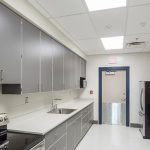
In Indian food businesses, walls work as quietly as a good line cook. When they fail, it shows up in inspection reports, rising cleaning time and, in the worst case, food safety incidents. FSSAI guidelines and international hygiene codes expect surfaces in food zones to be cleanable, non‑absorbent and resistant to corrosion.
Seamless commercial kitchen wall panels and well‑detailed kitchen cladding give operators a clear advantage over paint and tiles by turning these regulatory requirements into everyday practice rather than a scramble before audits.
What hygiene standards really expect from kitchen walls
Whether you look at FSSAI schedules, global food safety schemes or auditor checklists, the language around walls is surprisingly consistent. Surfaces in food handling areas must be smooth, non‑porous, impervious to moisture, and easy to clean and disinfect. That is the theory. In the real kitchen, thermal shock, steam, oils and daily degreasing push those surfaces to their limits. Paint begins to bubble and flake. Tile grout darkens, cracks and traps residues. The gap between “on paper” compliance and what an inspector sees on a surprise visit can get wide very quickly.
Seam‑minimised commercial kitchen wall panels are designed to hold that line. Their base construction, joint detailing and chemical resistance are all tuned to support frequent cleaning without losing surface integrity.
Why tiles and paints struggle with FSSAI expectations
Painted systems start smooth but degrade under strong degreasers, disinfectants and repeated scrubbing. Microcracks and peeling edges are not just cosmetic. They create tiny pockets where grease and microbes can hide, which is exactly what hygiene standards ask you to avoid.
Tiles seem more robust, yet grout is the weak link. Grout is porous, often textured, and naturally prone to staining and biofilm. Even with the best housekeeping, grout lines in a high‑load kitchen or prep area rarely stay in line with “smooth and impervious” criteria. Regrouting is disruptive and tends to be postponed until after an audit, not before.
In contrast, continuous kitchen cladding systems minimise or remove the need for grout and rely on smooth, sealed joints instead. That small design shift has a big impact on real‑world compliance.
How seamless commercial kitchen wall panels support compliance
Kleenclad‑type systems use non‑porous, rigid panels installed over a stable substrate, with joints, corners and skirtings all treated as hygiene details rather than afterthoughts. A few features matter directly for FSSAI and global codes:
- Smooth, low‑texture faces that allow detergents and sanitisers to work properly, then rinse off without leaving residue.
- Sealed or welded joints between panels so there are no open gaps where food particles or moisture can accumulate.
- Coved skirtings and internal corners that channel water away and make mopping paths efficient, reducing standing water at floor‑wall intersections.
- Compatibility with typical kitchen chemistries such as neutral and alkaline detergents, degreasers and sanitisers when used in recommended dilutions.
When these elements are in place, inspectors see surfaces that are visibly cleanable and free of obvious traps, which is the essence of what the regulations ask for.
The role of built‑in antimicrobial surface protection
Some commercial kitchen wall panels from Kleenclad incorporate integrated silver‑ion technology. This provides built‑in surface protection that helps reduce microbial load on the panel surface across the product lifetime. The antimicrobial mechanism is locked into the material, so it does not wash away with routine cleaning.
It is important to describe this conservatively. Antimicrobial technology:
- Helps inhibit microbial growth on the surface of the panel.
- Works alongside, not instead of, cleaning and disinfection protocols.
- Does not turn a wall into a medical device or guarantee a germ‑free environment.
This kind of transparent claim language aligns with global expectations and helps quality managers discuss the technology with auditors in a straightforward way.
Cleaning, downtime and inspection readiness
From a kitchen manager’s perspective, the key questions are simple: How long does it take to clean walls properly, and how long can areas be out of service?
With paint, cleaning becomes progressively harder as the finish wears. You clean more aggressively and still end up with dull, stained areas that fail visual inspections. With tiles, a lot of effort is diverted into grout scrubbing and periodic regrouting. That means more chemical spend, more labour and more downtime.
Seamless kitchen cladding shortens each of these loops. Housekeeping teams can wash down large wall areas quickly because the surface is continuous and the joints are sealed. There is no separate “grout problem” to manage. In busy QSR chains, hotel kitchens or central production units, this translates into:
- Shorter cleaning windows between services.
- Less deep‑clean disruption before audits.
- More predictable outcomes when different teams or contractors are involved.
Where Kleenclad fits into an FSSAI‑ready kitchen
Kitchens do not have a single risk profile from wall to wall. The hot line, prep area, dishwash zone and cold rooms all behave differently. Kleenclad systems allow you to tune commercial kitchen wall panels to these zones while preserving a consistent hygiene story.
For example:
- High‑splash cooklines can combine stainless steel behind direct heat with Kleenclad panels in adjacent zones.
- Prep rooms and cold areas can use full‑height Kleenclad kitchen cladding with coved skirtings to speed washdowns.
- Dishwash and potwash areas benefit from panels designed for steam and frequent chemical exposure.
In every case, the seam‑minimised geometry and non‑porous surfaces work with, rather than against, the FSSAI requirement for cleanable, impervious walls.
Specification checkpoints for Indian food businesses
When you are planning a new build or retrofit, it helps to treat wall systems like any other critical equipment. At minimum, check:
- Substrate condition, moisture and adhesion, so panels have a sound base.
- Jointing details at corners, around pass‑throughs, service penetrations and ceilings.
- Written cleaning compatibility for the chemicals your teams already use.
- Fire performance information suitable for interior kitchen applications.
- Availability of method statements and installer training, so that what is on site matches the drawings.
These steps give you a clear path from design intent to a kitchen that holds its compliance position over time.
Conclusion
Meeting FSSAI and global hygiene codes is not only about paperwork or training. The physical surface of the kitchen matters every single day. Paint and tile systems can meet requirements at handover, but often drift away from the “smooth, non‑absorbent, easy‑to‑clean” standard once heavy use begins.
Seamless commercial kitchen wall panels and well‑detailed kitchen cladding from Kleenclad are built to stay closer to that standard under real conditions, with non‑porous surfaces, sealed joints and optional antimicrobial surface protection that supports routine cleaning.
For Indian food businesses that want fewer surprises at inspections and more predictable hygiene performance, treating wall systems as a strategic choice rather than a finishing touch is a sensible place to start.