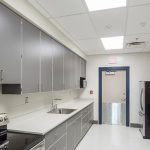
Modern laboratories and pharmaceutical plants depend on stable environments where surfaces are cleanable, joints are sealed, and maintenance does not compromise validation. Selecting the right lab clean room wall panels and ceiling systems determines how reliably a facility meets classification targets, how quickly teams can sanitise between batches, and how smoothly audits progress.
This guide outlines key design choices, compares wall and ceiling systems, and explains where Kleenclad’s hygienic approach supports performance, compliance, and lifecycle value.
Why surfaces define clean room outcomes?
Air handling often gets the spotlight, yet surface continuity decides whether corners, joints, and penetrations become particle traps. Paints tend to micro‑crack under harsh disinfectants and frequent wipe‑downs. Tiles fail at grout lines, where residues and moisture persist.
Seam‑minimised lab clean room wall panels and integrated ceiling grids reduce harborage points, make cleaning repeatable, and help maintain classification during routine operations and inspections.
What to demand from the lab clean room wall panels
- Non‑porous, smooth finish: Surfaces should clean quickly, resist staining, and tolerate rotations of alcohols, oxidisers, QACs, and periodic sporicidals when used as directed.
- Seam‑minimised detailing: Coved skirtings, thermoformed internal and external corners, and sealed joints remove dirt traps at floor, wall, and ceiling interfaces.
- Built‑in antimicrobial surface protection: Integrated silver‑ion technology that helps reduce microbial load on the panel surface over the product life, while clearly complementing – not replacing – cleaning SOPs.
- Documented fire performance: Clear, current data appropriate to interior pharma applications.
- Method statements and training: Consistent installation outcomes across rooms, expansions, and shutdown windows.
Wall system options for clean room environments
- Hygienic PVC panels: Seam‑minimised systems with coved skirtings and factory or onsite thermoformed corners provide smooth, continuous surfaces built for frequent disinfection. Integrated silver‑ion protection supports surface hygiene between cleans.
- Compact laminate and HPL: Robust and impact-resistant, ideal for change rooms, corridors, and select process spaces. Validate compatibility with aggressive agents in higher-grade rooms and protect edges around cut‑outs.
- Modular sandwich panels: Speed of build and reconfigurability are strengths. Focus on airtight jointing, gasketing, and interfaces with pass‑throughs, windows, and mechanical penetrations.
- Stainless applications: Best as targeted protection at high‑wear or splash zones. Whole‑room use is less common due to cost and appearance changes with abrasion.
Ceiling systems for clean room reliability
Ceilings often host HEPA housings, light fixtures, and service access. That makes joint integrity and grid selection critical. Walkable systems aid maintenance but require careful specification to preserve airtightness and cleanliness. Non‑walkable ceilings reduce mass and cost, but demand planned access points.
In both cases, continuous coving and sealed transitions at the wall‑to‑ceiling line are essential to keep the envelope particle‑tight and easy to sanitise.
Design details that pass audits
- Airtight penetrations: Seal around conduits, view panels, and pass boxes with approved profiles and sealants to maintain pressure cascades.
- Floor‑to‑wall transitions: Coved skirtings prevent pooling and simplify mop paths, improving cleaning consistency.
- Controlled cut‑outs: Factory‑finished edges or approved onsite sealing at medical gas points, utilities, and monitors protect the core and finish.
- Zoning and classification: Map panel and ceiling selections to room grades so materials and detailing match risk profiles.
Cleaning compatibility and SOP alignment
Cleaning outcomes depend on matched chemistry and disciplined SOPs. Require written compatibility for disinfectants, dilutions, contact times, and temperatures. Surfaces should resist whitening, softening, delamination, or micro‑cracking under routine rotation.
Clear aftercare guidelines allow housekeeping and QA to standardise practice across shifts and contracted teams.
Where Kleenclad strengthens lab clean room wall panels and ceilings
- Seam‑minimised hygiene by design: Panels, trims, and thermoformed corners create continuous surfaces that reduce inspection failures at joints and interfaces, supporting stable particle counts and visual checks.
- Built‑in antimicrobial surface protection: Embedded silver‑ion technology helps inhibit microbial growth on the panel surface throughout the product’s life. Claims are conservative and positioned to complement cleaning and disinfection.
- Chemical and moisture resilience: Surfaces maintain integrity through frequent disinfectant cycles when used per guidance, helping avoid early refurbishment and downtime.
- Installation discipline and documentation: Method statements, installer guidance, and cleaning compatibility information support qualification, change control, and routine audits.
Procurement checklist for transactional decisions
- Classification and zoning: Align materials and detailing to Grade B through D rooms, change areas, and corridors.
- Substrates and bond: Verify moisture, adhesion, and flatness; specify approved primers and adhesives.
- Interfaces and coving: Detail joints, corners, pass‑throughs, windows, and wall‑to‑ceiling transitions with approved profiles.
- Fire and compliance: Obtain current test documents relevant to interior clean room use.
- Maintenance and access: Define walkable versus non‑walkable ceilings, service hatches, and safe procedures that protect envelope integrity.
Conclusion
In labs and pharma, the envelope is a control measure. Seam‑minimised clean room walls and well‑designed ceilings remove harbourage points, make cleaning repeatable, and support reliable classification. By selecting non‑porous finishes, airtight detailing, validated cleaning compatibility, and conservative antimicrobial language, facilities gain predictable performance and confident audits.
Kleenclad brings these fundamentals together, offering lab clean room wall panels and ceiling solutions with practical detailing, installation discipline, and clear aftercare for Indian projects that need to run cleanly and on schedule.