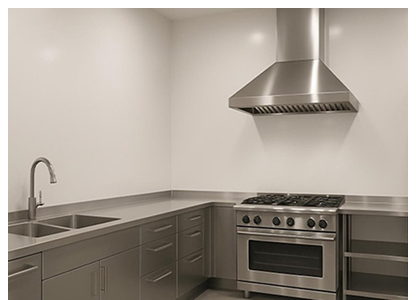
Commercial Kitchen Wall Cladding: A Practical Guide to Hygienic and Durable Kitchen Walls
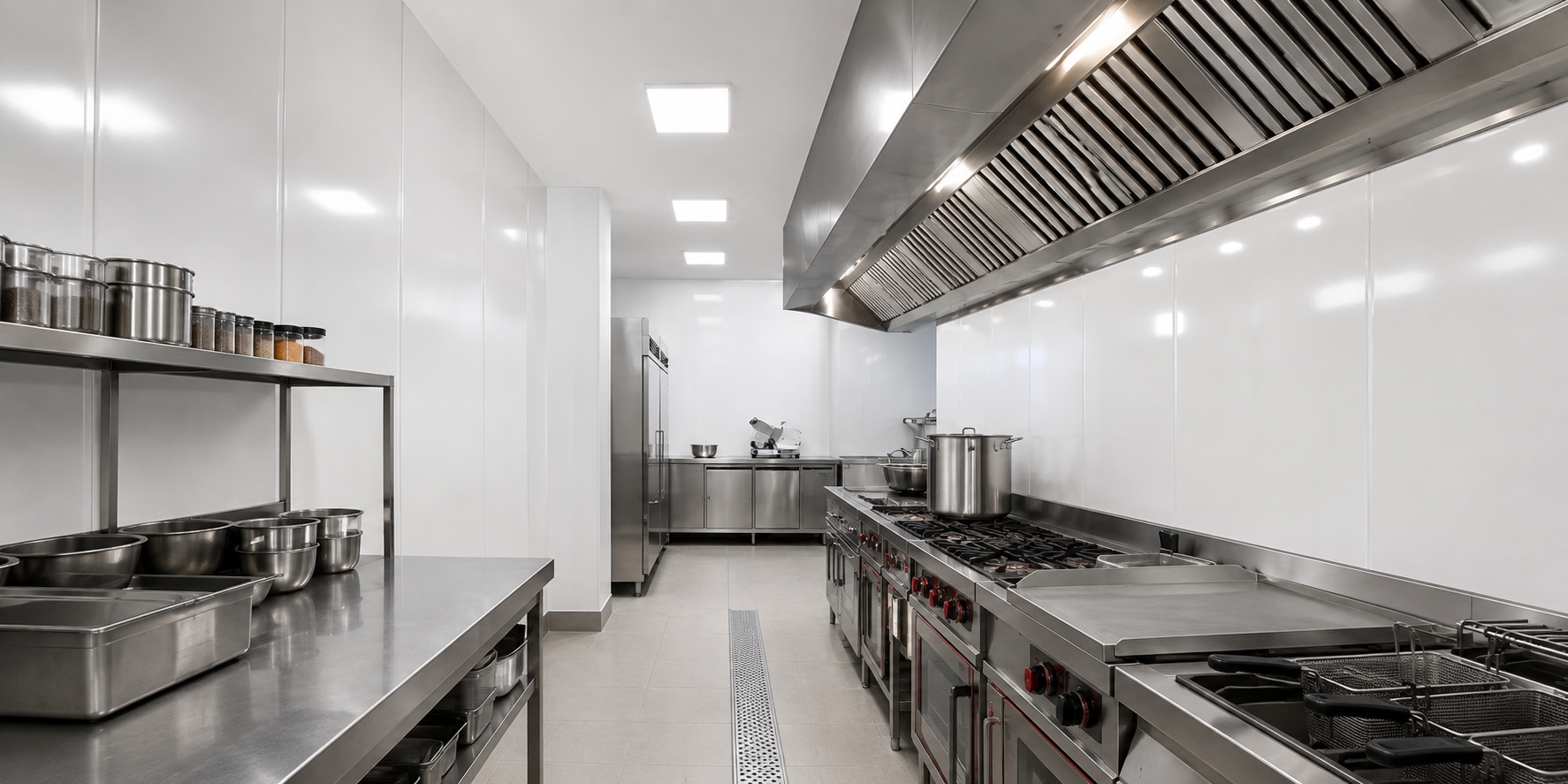
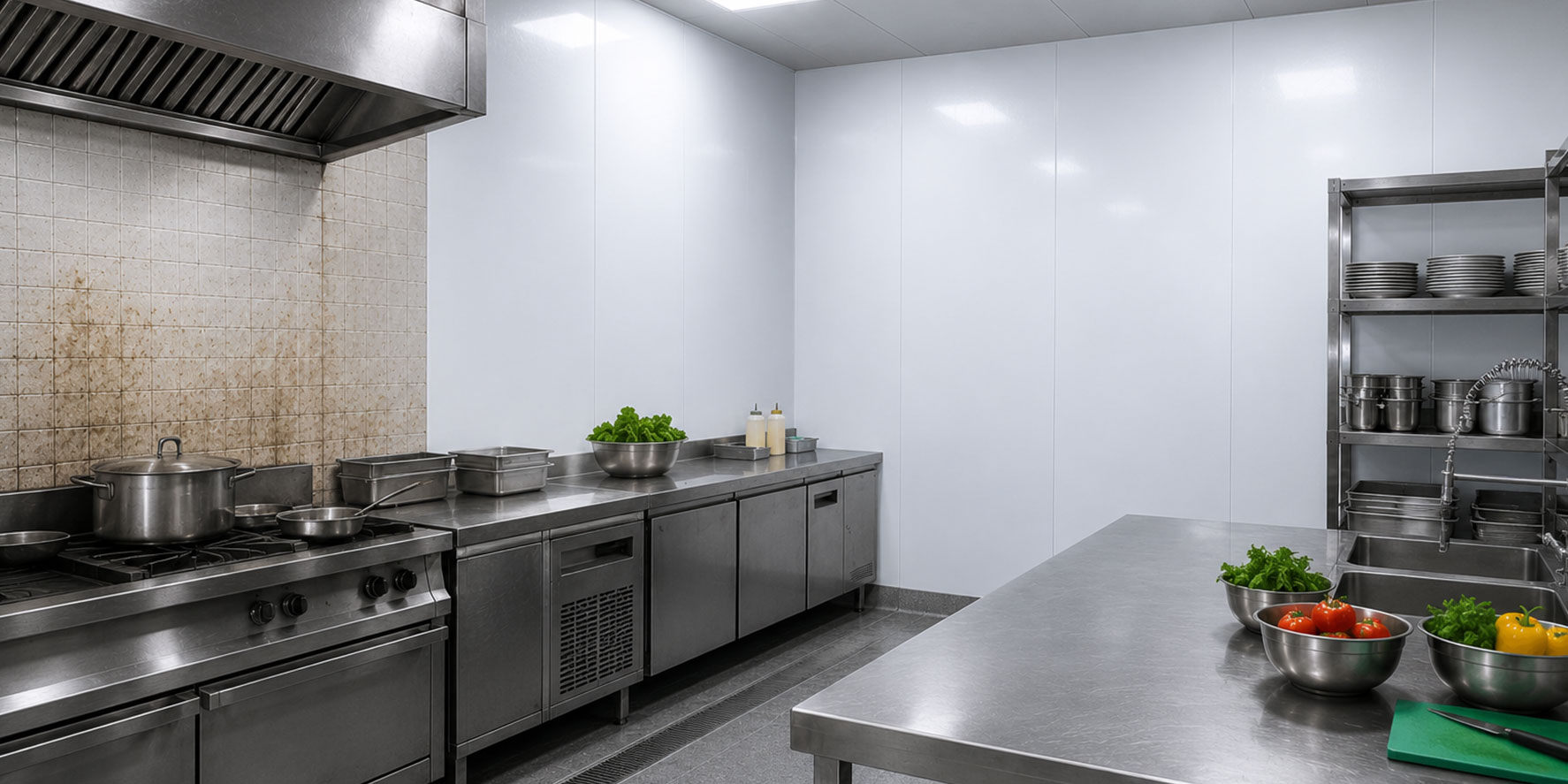
Commercial kitchens operate under demanding conditions every day. High temperatures, steam, grease, food splashes, frequent cleaning, heavy equipment movement, and continuous staff activity can put significant pressure on wall surfaces. In such environments, choosing the right wall finish is not simply a design decision. It is an important part of creating a kitchen that is easier to maintain, hygienic, durable, and suitable for everyday operations.
This is where commercial kitchen wall cladding can provide a practical solution. A properly selected wall cladding system can create a protective surface that is easier to clean and maintain than many conventional wall finishes.
Whether the project involves a restaurant, hotel kitchen, institutional catering facility, hospital kitchen, school canteen, food-service area, or large-scale commercial kitchen, wall surfaces should be selected according to the specific operating conditions of the space.
Why Wall Protection Matters in Commercial Kitchens
Commercial kitchens experience considerably more activity than typical indoor environments. Walls can be exposed to food particles, oils, grease, water, steam, cleaning chemicals, and accidental impact throughout the day.
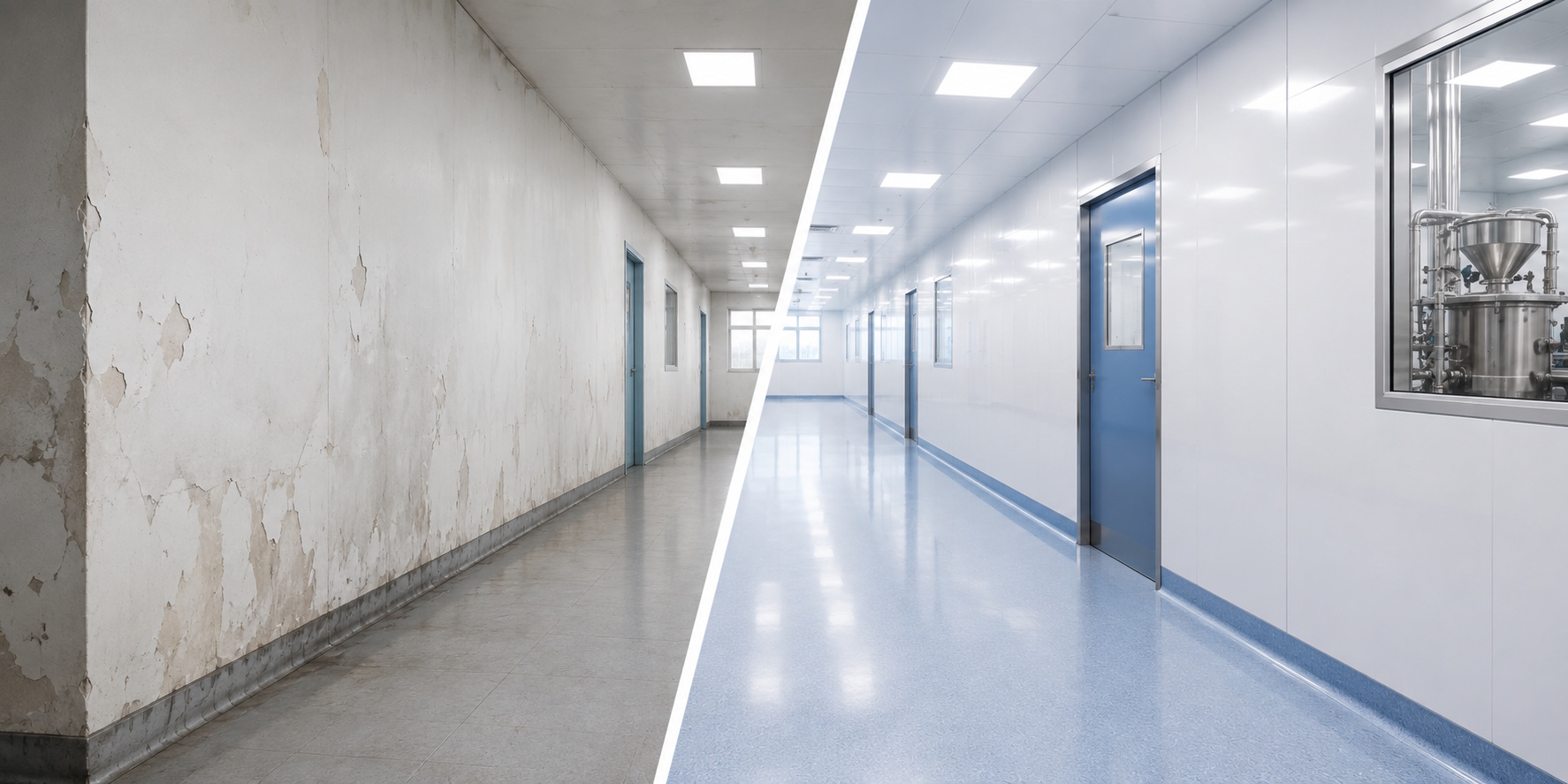
Damaged or difficult-to-clean wall surfaces can create additional maintenance challenges. Cracks, peeling finishes, damaged surfaces, and difficult-to-clean areas can make routine cleaning more time-consuming.
A suitable wall protection commercial kitchen system can help address these challenges by providing an additional protective layer over the underlying wall.
The objective is not simply to make the kitchen look cleaner. The wall surface should support practical cleaning routines and withstand the everyday conditions of a professional food preparation environment.
1. Hygiene and Ease of Cleaning
Hygiene is one of the most important considerations when selecting a wall surface for a commercial kitchen.
Food preparation areas require regular cleaning, and walls can accumulate grease, splashes, dust, and other residues during normal operations. A surface that is difficult to clean can increase maintenance effort and may become visibly worn over time.
This is why hygienic wall cladding for commercial kitchens should be evaluated based on its surface characteristics, cleaning requirements, joints, installation details, and compatibility with the cleaning products used by the facility.
Smooth, properly installed wall surfaces can make routine wiping and cleaning easier. The fewer difficult-to-access areas and damaged sections a surface has, the more straightforward regular maintenance can become.
However, wall cladding should complement—not replace—established kitchen hygiene procedures. Cleaning schedules, food-safety practices, appropriate disinfectants, ventilation, and staff hygiene remain essential.
2. Choosing the Right Commercial Kitchen Wall Panels
Not all wall panels are designed for the same environment. Commercial kitchens require materials that can handle frequent cleaning and everyday operational wear.
When evaluating commercial kitchen wall panels, consider the conditions the panels will actually experience.
Important factors include:
- Resistance to everyday impact
- Surface cleanability
- Moisture resistance
- Compatibility with cleaning products
- Temperature conditions
- Installation requirements
- Joint and corner detailing
- Long-term maintenance
- Overall appearance
The right panel should be selected according to the location and use of the kitchen. For example, a wall immediately behind cooking equipment may have different performance requirements from a wall in a staff dining or storage area.
3. Heat, Moisture and Everyday Kitchen Conditions
Commercial kitchens generate heat and moisture continuously. Cooking equipment, dishwashing areas, steam, hot food preparation, and cleaning activities can all contribute to demanding environmental conditions.
Wall surfaces therefore need to be selected with the surrounding conditions in mind.
PVC wall cladding for commercial kitchens is one option that may be considered for suitable applications because PVC-based systems can provide a smooth, practical surface that is easy to maintain. However, the suitability of any PVC product should be assessed against its technical specifications, particularly where the wall is exposed to elevated temperatures or is located close to cooking equipment.
The installation design is equally important. Appropriate detailing around corners, joints, penetrations, sinks, worktops, and equipment can influence the overall performance of the wall system.
4. Easy Cleaning Means More Efficient Maintenance
Kitchen staff already have a demanding workload. Cleaning should therefore be as straightforward and efficient as possible.
Easy to clean kitchen wall panels can help simplify routine maintenance by providing surfaces that can be wiped and maintained according to the manufacturer's recommended procedures.
This can be especially useful in areas where splashes and food residues are common.
A practical wall system should also be considered from a lifecycle perspective. A surface that remains easier to maintain over time can help reduce the frequency of cosmetic repairs and unnecessary refurbishment.
The cleaning method should always follow the manufacturer's instructions. Strong chemicals, abrasive cleaning tools, or unsuitable procedures can affect the performance and appearance of some wall materials.
5. Durability in High-Use Kitchen Areas
Commercial kitchens are busy environments. Trolleys, equipment, containers, utensils, cleaning tools, and staff movement can all expose walls to accidental impact.
A wall finish that is not suitable for these conditions may deteriorate quickly.
Commercial kitchen wall cladding can provide a protective surface designed to withstand the demands of a busy kitchen when the appropriate product is specified for the application.
Durability is particularly important in areas such as:
- Food preparation zones
- Dishwashing areas
- Cooking areas
- Commercial bakery kitchens
- Restaurant back-of-house areas
- Hotel kitchens
- Institutional kitchens
- Catering facilities
- Food-service corridors
The right specification can help protect the underlying wall and contribute to a more consistent appearance over the life of the facility.
6. Fire Safety Should Be Considered Carefully
Fire safety is a critical consideration in commercial kitchens because cooking equipment, oils, electrical appliances, gas systems, and high temperatures can create potential fire hazards.
Wall cladding should therefore be selected with the project's applicable fire-safety requirements in mind.
Rather than assuming that every wall panel has the same fire performance, project teams should review the manufacturer's current technical documentation, applicable test standards, and certification for the specific product being considered.
This is particularly important when selecting materials for areas close to cooking equipment or other heat sources.
Fire performance should be evaluated as part of the complete wall system and installation—not solely on the name or material category of the panel.
7. A Professional Kitchen Appearance
Commercial kitchens need to be functional, but appearance still matters. A clean and well-maintained kitchen can contribute to the overall impression of a food-service business.
This is especially relevant for restaurants, hotels, catering facilities, and commercial kitchens where customers may have some visibility into food preparation areas.
Modern restaurant kitchen wall cladding can help create a clean, consistent appearance while also providing practical wall protection.
Neutral and light finishes can make dirt and food splashes easier to identify during cleaning, while different available finishes can allow designers to coordinate the kitchen with the wider interior design.
The priority should always be functionality first, followed by aesthetics that work within the operational requirements of the kitchen.
8. Installation and Maintenance Considerations
The performance of a wall cladding system depends not only on the panel itself but also on how it is installed.
Before installation, the condition of the existing wall should be assessed. Uneven substrates, moisture problems, damaged surfaces, and unsuitable fixing conditions may need to be addressed before the cladding system is installed.
Attention should also be given to corners, joints, service penetrations, doors, worktops, sinks, and equipment interfaces.
Good detailing can help create a more complete and maintainable wall protection system.
For refurbishment projects, installation planning is particularly important because work may need to be completed while the kitchen continues to operate. A well-planned installation can help minimise disruption to daily operations.
9. Looking Beyond the Initial Cost
The cheapest wall finish is not necessarily the most economical option over the long term.
When evaluating commercial kitchen wall panels, project owners should consider more than the initial purchase price. Cleaning requirements, expected durability, repair frequency, installation requirements, replacement costs, and maintenance effort can all contribute to the total cost of ownership.
A durable and maintainable wall system may provide better long-term value when compared with a finish that requires frequent repairs or replacement.
This is particularly relevant for commercial kitchens that operate every day and cannot easily be taken out of service for refurbishment.
Choosing the Right Solution for Your Commercial Kitchen
Selecting a wall system should begin with understanding the actual environment in which it will be installed.
A kitchen in a restaurant may have different requirements from a hospital catering facility or a large institutional kitchen. Similarly, the wall behind cooking equipment may need different consideration from walls in preparation, storage, or service areas.
Kleenclad offers wall cladding solutions for demanding environments where hygiene, durability, maintenance, and practical performance are important considerations.
Whether you are developing a new kitchen, renovating an existing facility, or upgrading a commercial food-service environment, the right wall system can provide a more practical approach to long-term wall protection.
Hygienic wall cladding for commercial kitchens should ultimately be selected based on the specific requirements of the facility, including cleaning practices, environmental conditions, expected impact, temperature exposure, installation details, and applicable safety requirements.
With the right specification and professional installation, wall cladding can help create commercial kitchen environments that are easier to maintain, more resilient to everyday use, and better suited to the demands of modern food-service operations.
If you are planning a restaurant, hotel, institutional, healthcare, or commercial kitchen project, speak with Kleenclad to evaluate the appropriate wall protection solution for your application.
FAQs
1. What is wall protection for commercial kitchens?
Wall protection for commercial kitchens is a protective wall system designed to help surfaces withstand frequent cleaning, moisture, food splashes, stains, impact, and everyday kitchen activity. The right system can make walls easier to maintain while protecting the underlying surface.
3. What are commercial kitchen wall panels used for?
Commercial kitchen wall panels are used to create durable, cleanable wall surfaces in restaurants, hotels, catering facilities, institutional kitchens, food preparation areas, and other commercial food-service environments. They can help protect walls from everyday wear and cleaning activities.
3. Why choose hygienic wall cladding for commercial kitchens?
Hygienic wall cladding for commercial kitchens can provide smooth and maintainable wall surfaces that support regular cleaning routines. It can also help protect walls from moisture, stains, impact, and everyday operational wear when the appropriate product is selected for the application.
4. What are the benefits of commercial kitchen wall cladding?
Commercial kitchen wall cladding can offer several practical benefits, including easier maintenance, improved wall protection, durability, moisture resistance, and a consistent appearance. The exact performance depends on the material, product specifications, installation, and conditions of the kitchen.
5. Is PVC wall cladding for commercial kitchens a good option?
PVC wall cladding for commercial kitchens can be considered where a smooth, practical, and easy-to-maintain wall surface is required. However, product specifications should be checked for factors such as temperature exposure, cleaning chemicals, fire performance, impact resistance, and installation conditions before selection.
6. Are easy to clean kitchen wall panels suitable for busy kitchens?
Yes, easy to clean kitchen wall panels can be particularly useful in busy commercial kitchens where walls are exposed to food splashes, grease, moisture, and frequent cleaning. The manufacturer's recommended cleaning procedures should always be followed to maintain the panel's performance.
7. Where can restaurant kitchen wall cladding be installed?
Restaurant kitchen wall cladding can be used in food preparation areas, cooking zones, dishwashing areas, service areas, storage areas, and other suitable back-of-house spaces. The appropriate wall cladding should be selected according to the specific environmental and operational conditions of each area.
8. Can commercial kitchen wall panels withstand frequent cleaning?
Many commercial kitchen wall panels are designed for environments where regular cleaning is required. Before installation, the product's cleaning and chemical-resistance specifications should be reviewed to ensure compatibility with the cleaning products and procedures used in the kitchen.
9. How does commercial kitchen wall cladding help protect walls?
Commercial kitchen wall cladding creates a protective surface over the underlying wall, helping reduce exposure to everyday impacts, stains, moisture, food splashes, and cleaning activity. This can help reduce the need for frequent cosmetic repairs when the correct system is installed and maintained.
10. Are hygienic wall cladding systems suitable for hotel and institutional kitchens?
Yes, hygienic wall cladding for commercial kitchens can be considered for hotel kitchens, institutional catering facilities, cafeterias, hospitals, schools, and other professional food-service environments. The product should be selected according to the hygiene, cleaning, durability, temperature, and safety requirements of the facility.
11. What should be considered when selecting commercial kitchen wall panels?
When selecting commercial kitchen wall panels, consider surface cleanability, moisture resistance, impact resistance, chemical compatibility, fire performance, temperature exposure, installation requirements, joint detailing, maintenance, and the specific conditions of the kitchen.
12. How do I choose the right wall protection commercial kitchen solution?
To choose the right wall protection commercial kitchen solution, first assess where the panels will be installed and what conditions they will experience. Consider heat, moisture, cleaning frequency, impact, food exposure, chemicals, fire-safety requirements, and expected maintenance before finalising the product.
13. Can PVC wall cladding for commercial kitchens be used near cooking areas?
PVC wall cladding for commercial kitchens should only be used near cooking or high-temperature areas when the specific product is technically suitable for those conditions. Always check the manufacturer's temperature limits, fire-performance documentation, installation requirements, and recommended clearance from heat sources.
14. Does restaurant kitchen wall cladding improve the appearance of a kitchen?
Yes. Restaurant kitchen wall cladding can provide a clean, consistent, and professional wall finish while also serving a practical protective function. Different finishes and colours may allow the wall system to complement the overall design of the restaurant or food-service facility.
15. Why is easy maintenance important when choosing kitchen wall panels?
Commercial kitchens require frequent cleaning and operate for long hours. Easy to clean kitchen wall panels can simplify routine maintenance and help facilities maintain a cleaner-looking environment. Choosing a suitable panel also requires consideration of cleaning chemicals, installation details, and the manufacturer's maintenance instructions.
Related Blogs
Explore updates and perspectives from KleenClad as we share what’s shaping cleaner, smarter spaces.
.png)