Infection Control Wall Cladding: Key Considerations for Modern Hospital Interiors
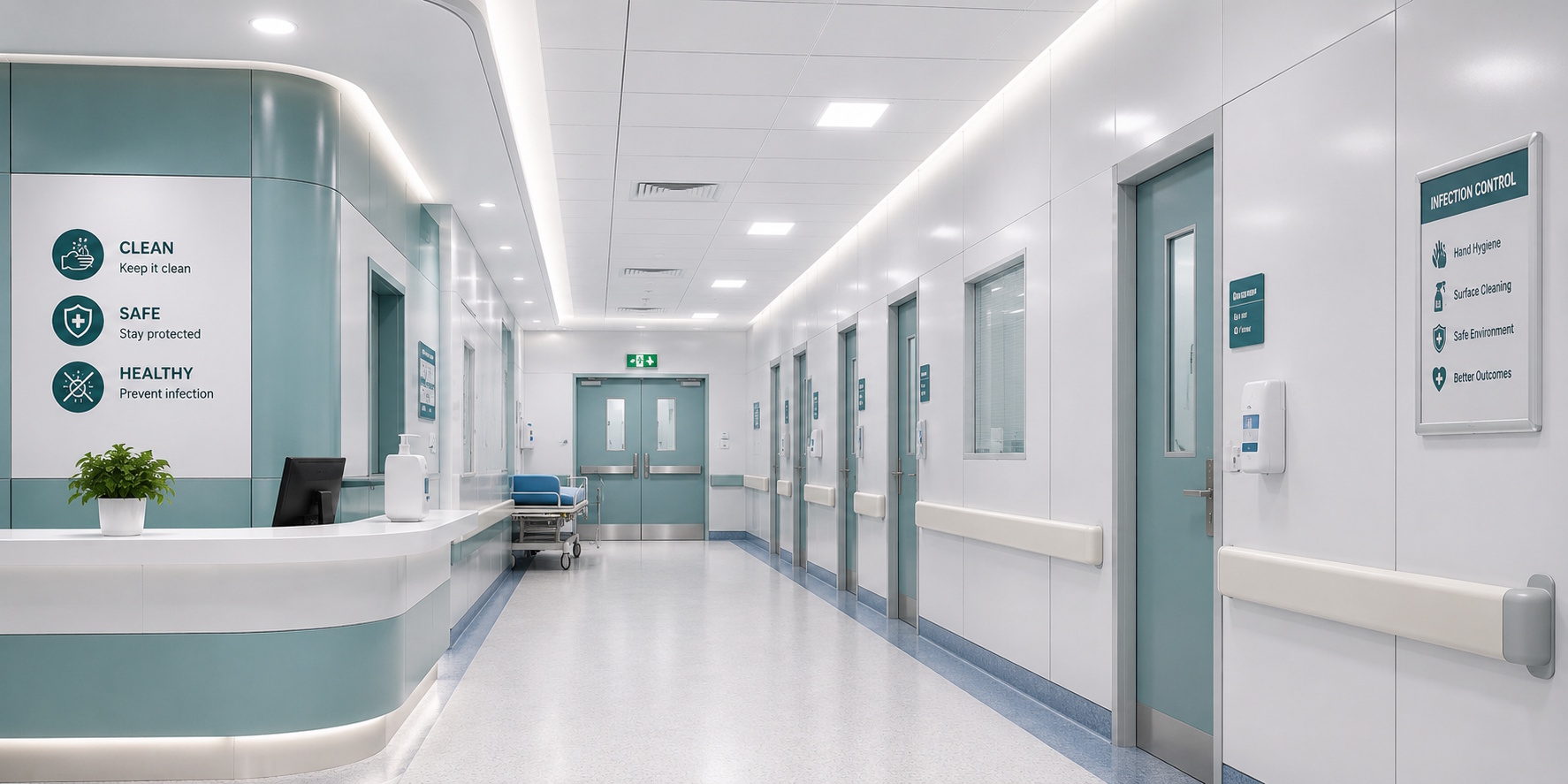
Modern hospitals need environments where hygiene, durability, cleaning, and patient safety work together. While infection prevention involves multiple systems and procedures, the physical surfaces within a healthcare facility also play an important supporting role. Walls are continuously exposed to cleaning, equipment movement, moisture, contact, and everyday clinical activity.
For this reason, selecting appropriate wall finishes should be part of the healthcare facility planning process. Infection control wall cladding can provide a practical approach to creating durable, smooth, and easier-to-maintain surfaces in hospitals and other clinical environments.
Kleenclad provides hygienic wall cladding solutions for healthcare environments where surface performance, cleanability, durability, and long-term maintenance are important considerations.
Why Wall Surfaces Matter in Hospital Infection Control
Hospital walls are exposed to considerably more activity than walls in most conventional buildings. Patient beds, wheelchairs, medical equipment, trolleys, cleaning equipment, staff movement, and regular maintenance can all affect wall surfaces.
At the same time, hospital walls may require frequent cleaning and disinfection. Traditional painted surfaces can develop scratches, stains, cracks, peeling, or other forms of deterioration over time. Damaged surfaces may become more difficult to maintain effectively.
This is why hygienic hospital wall solutions need to be evaluated not only for appearance but also for their ability to support everyday cleaning and maintenance requirements.
A properly specified wall cladding system can provide a protective surface over the underlying wall while helping create a more consistent and maintainable healthcare interior.
What Is Infection Control Wall Cladding?
Infection control wall cladding refers to wall protection systems designed for environments where hygiene, cleanability, durability, and surface maintenance are important.
In healthcare facilities, the objective is not simply to install a material that looks clean. The complete wall system needs to be considered, including the surface finish, joints, corners, penetrations, doors, service openings, and installation details.
When properly designed and installed, cladding can help create smoother and more maintainable wall surfaces.
However, it is important to understand that wall cladding is only one component of infection prevention. It does not replace cleaning protocols, disinfection procedures, hand hygiene, ventilation, environmental controls, or other hospital infection-prevention practices.
Hygienic Wall Cladding for Hospitals: Key Benefits
Hygienic wall cladding for hospitals can provide several practical advantages when the correct system is selected for the intended application.
Easier Surface Maintenance
Hospitals require regular cleaning, and surfaces that are easier to wipe and maintain can help support routine housekeeping procedures.
Protection Against Everyday Wear
Walls in hospitals can experience frequent contact and accidental impact. A suitable cladding system can provide additional protection against everyday wear.
Moisture Management
Certain healthcare areas may be exposed to water, cleaning processes, or humidity. Appropriate wall materials can help protect underlying surfaces where moisture resistance is required.
Consistent Interior Finish
Wall cladding can provide a consistent appearance across clinical areas while allowing project teams to select finishes according to the design requirements of different spaces.
Healthcare Wall Cladding for Different Clinical Areas
Not every area of a hospital has the same requirements. Healthcare wall cladding should therefore be selected according to the conditions of the specific space.
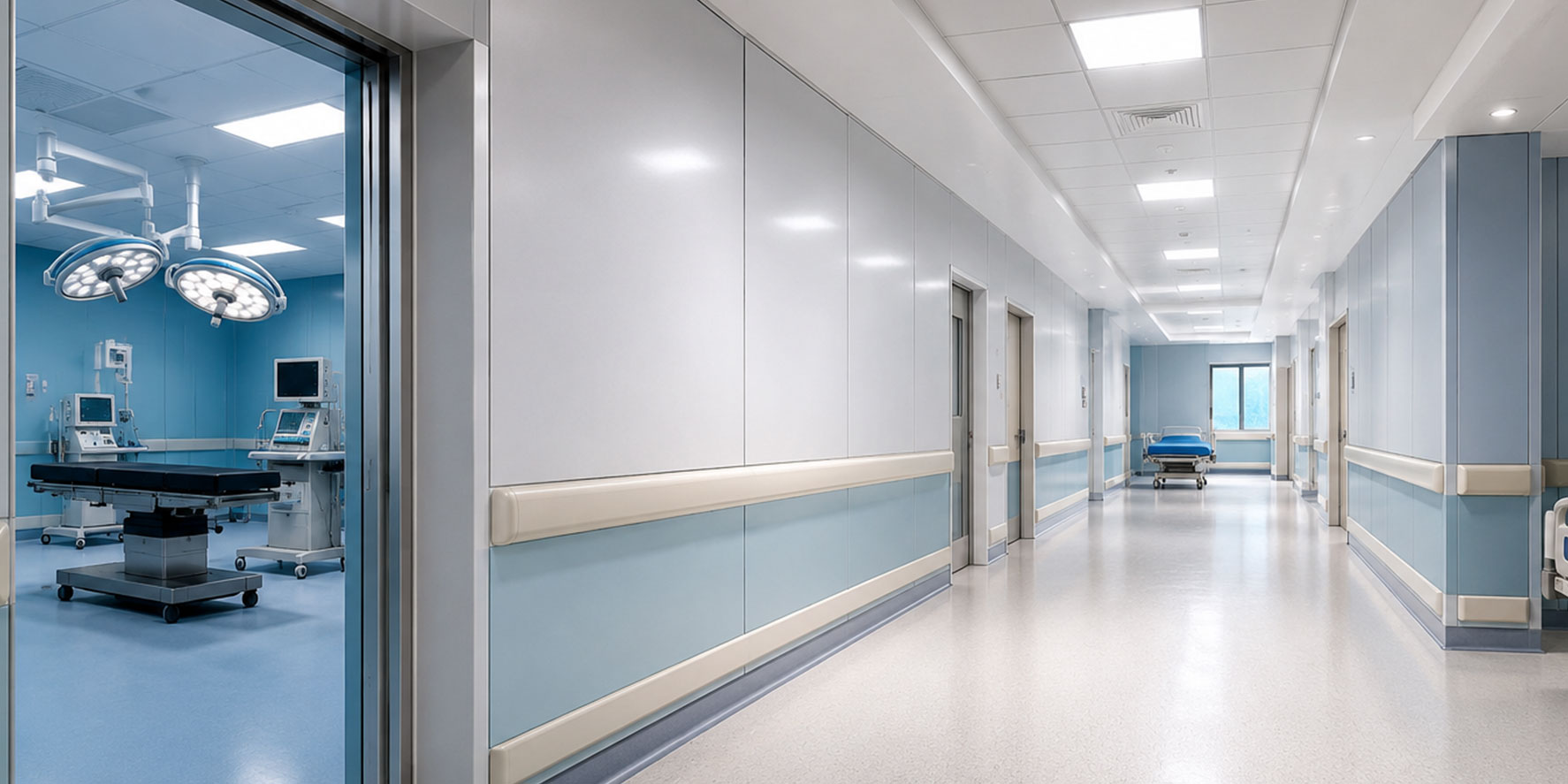
Operating theatres, ICUs, dialysis areas, laboratories, patient rooms, emergency departments, corridors, and service areas can have different levels of traffic, cleaning frequency, moisture exposure, and impact.
This means that choosing one wall system purely because it is suitable for one hospital area may not automatically make it suitable for every other area.
Kleenclad's healthcare project work demonstrates how wall cladding can be applied across different clinical environments.
At Vriksh Fertility in Bangalore, Kleenclad wall cladding was used in Labour & Delivery areas and Operation Theatres, highlighting the importance of hygiene, maintenance, and durability in critical healthcare spaces.
At Banaswadi Medical Centre in Bangalore, Kleenclad wall cladding was used for Operation Theatres, where durable and maintainable wall surfaces are important for continuous healthcare operations.
Hygienic Hospital Cladding for High-Sanitation Areas
Clinical environments with demanding sanitation requirements need surfaces that can withstand frequent cleaning without becoming difficult to maintain.
Hygienic hospital cladding can provide a practical alternative to wall finishes that may require repeated repainting or extensive repairs.
Operation theatres, treatment areas, ICUs, and other clinical spaces can benefit from carefully selected wall systems where cleaning and surface durability are important.
Kleenclad has also completed healthcare installations at NU Hospitals in Bangalore, including multiple Operation Theatres, ICUs, and the Dialysis Centre. These applications demonstrate the need for wall surfaces that can support continuous healthcare operations while remaining practical to clean and maintain.
The specific performance required should always be determined according to the facility's operational conditions and the technical specifications of the selected product.
Antimicrobial Wall Panels for Hospitals
In areas where hygiene is a major consideration, project teams may also evaluate antimicrobial wall panels for hospitals.
Antimicrobial technologies are designed to provide an additional layer of protection against the growth or persistence of microorganisms on the material, depending on the technology and product specification.
However, antimicrobial performance should not be confused with sterilisation. Antimicrobial wall panels do not eliminate the need for routine cleaning and disinfection.
When selecting antimicrobial wall panels, healthcare facilities should review relevant product documentation, test data, cleaning compatibility, installation requirements, and the intended application.
The goal should be to combine appropriate surface technology with a comprehensive infection-prevention strategy.
Medical Wall Cladding Solutions for Modern Healthcare
Hospitals increasingly require building materials that can perform under continuous operational conditions.
Medical wall cladding solutions can be considered for new hospital construction, clinical expansion, refurbishment, and renovation projects.
A suitable wall system can help protect the underlying wall while supporting the functional and visual requirements of the healthcare environment.
At Madras Heart Centre in Chennai, Kleenclad wall cladding was installed as part of a healthcare project executed by Medicraft Technologies. The project demonstrates the application of specialised wall surfaces in a modern clinical environment where hygiene, durability, and maintenance are important considerations.
Healthcare Wall Cladding Panels and Surface Design
Healthcare wall cladding panels should be evaluated as part of a complete wall system rather than simply as individual panels.
The performance of the final installation can be influenced by:
- Panel material and thickness
- Surface finish
- Joint configuration
- Corner detailing
- Adhesive or fixing method
- Substrate preparation
- Door and frame interfaces
- Service penetrations
- Cleaning procedures
- Maintenance practices
Poorly planned joints or penetrations can undermine the practical benefits of an otherwise suitable wall material.
For this reason, architects, contractors, consultants, and healthcare facility managers should consider installation details during the design stage.
Antibacterial Wall Cladding for Hospitals
Antibacterial wall cladding for hospitals can be considered where bacterial growth is a specific surface-hygiene concern.
Antibacterial and antimicrobial technologies are not necessarily identical, so project teams should review the exact claims, testing, and technical documentation associated with the product being considered.
The wider purpose of hygienic wall systems is to support a healthcare environment where surfaces can be cleaned, maintained, and protected against the demanding conditions of daily hospital operations.
Kleenclad's approach focuses on combining hygienic surface requirements with practical wall protection for healthcare applications.
Cleanroom Wall Cladding for Healthcare Environments
Some healthcare areas require a higher degree of environmental control than general hospital spaces.
Cleanroom wall cladding for healthcare can be considered for controlled environments where surface cleanability, durability, joint detailing, and maintenance are particularly important.
Cleanroom applications require attention to the entire room system rather than just the wall panels. Walls, ceilings, doors, flooring, lighting, ventilation, penetrations, and other components need to work together according to the requirements of the facility.
When selecting a cleanroom wall system, project teams should review the product's technical documentation and ensure that it is suitable for the intended environment.
PVC Wall Cladding for Hospitals
PVC wall cladding for hospitals can be considered for healthcare applications where a durable, cleanable, and practical wall surface is required.
PVC-based wall systems can offer advantages such as smooth surfaces, moisture resistance, and practical maintenance, depending on the specific product formulation and specification.
However, healthcare facilities should not select PVC solely because it is a common wall material. Factors such as fire performance, chemical compatibility, impact resistance, cleaning requirements, temperature conditions, installation method, and project-specific standards should be evaluated before specification.
Real Healthcare Applications of Kleenclad
Kleenclad's healthcare installations provide practical examples of how hygienic wall cladding can be applied in real clinical environments.
At Ramaadevi Hospital in Andhra Pradesh, Kleenclad completed multiple Operation Theatres and critical healthcare areas using wall cladding solutions designed around smooth, durable, and maintainable surfaces.
These projects illustrate an important principle: wall cladding requirements should be driven by the actual operating conditions of the healthcare facility rather than by aesthetics alone.
For hospitals, the wall system needs to work every day—during cleaning, patient movement, equipment movement, maintenance, and continuous clinical operations.
How to Select the Right Hospital Wall Cladding
Before selecting hospital wall cladding, healthcare project teams should evaluate several factors.
- Cleaning Requirements: Understand how frequently the surface will be cleaned and which cleaning agents will be used.
- Impact Exposure: Identify areas where beds, trolleys, equipment, or furniture may regularly contact the walls.
- Moisture Exposure: Consider areas exposed to water, humidity, washing, or other moisture-related conditions.
- Hygiene Requirements: Determine whether general hygienic surfaces, antimicrobial technology, or more specialised cleanroom requirements are appropriate.
- Installation Details: Review joints, corners, penetrations, doors, and transitions as part of the complete wall system.
- Long-Term Maintenance: Consider cleaning, repairs, replacement requirements, and the expected lifecycle of the wall system.
Building Better Healthcare Interiors with Kleenclad
Modern hospitals require infrastructure that supports both clinical performance and everyday operational efficiency.
From operating theatres and ICUs to dialysis centres, laboratories, patient areas, and controlled environments, the right wall system can contribute to a more durable and maintainable interior.
Kleenclad provides hygienic wall cladding for healthcare environments, helping architects, contractors, hospital management teams, and facility professionals consider hygiene, durability, cleanability, and design together.
Whether the requirement is hygienic hospital wall solutions, healthcare wall cladding, antimicrobial wall panels for hospitals, medical wall cladding solutions, or cleanroom wall cladding for healthcare, the right specification should always be based on the specific requirements of the space.
Wall cladding cannot replace an infection-control program, but it can support the physical environment in which that program operates. By selecting appropriate materials, planning installation details carefully, and following recommended cleaning and maintenance procedures, healthcare facilities can create wall surfaces designed to perform reliably throughout everyday hospital operations.
For hospitals planning new construction, renovation, or clinical-area upgrades, Kleenclad can help evaluate suitable wall cladding solutions based on the project's hygiene, durability, maintenance, and environmental requirements.
FAQs
1. What is infection control wall cladding for hospitals?
Infection control wall cladding is a wall protection solution designed for healthcare environments where hygiene, cleanability, durability, and regular maintenance are important. It can help create smooth and maintainable wall surfaces in areas such as operating theatres, ICUs, laboratories, and patient areas.
2. What are hygienic hospital wall solutions?
Hygienic hospital wall solutions are wall systems designed to support the cleaning, maintenance, and durability requirements of healthcare facilities. Depending on the product, they may provide resistance to moisture, impact, stains, and frequent cleaning while contributing to a more consistent hospital interior.
3. Why is hygienic wall cladding for hospitals important?
Hygienic wall cladding for hospitals can help protect walls from everyday wear while providing surfaces that are easier to clean and maintain. It can be particularly useful in high-traffic and hygiene-sensitive areas where traditional wall finishes may require frequent repair or repainting.
4. Where can healthcare wall cladding be used?
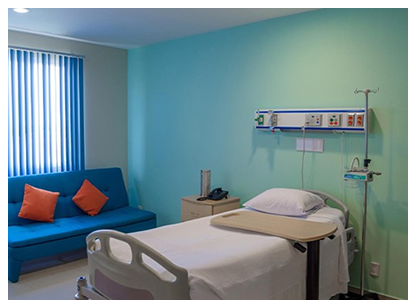
Healthcare wall cladding can be considered for operation theatres, ICUs, dialysis areas, laboratories, patient rooms, treatment areas, emergency departments, corridors, diagnostic facilities, and other healthcare spaces. The appropriate system should be selected according to the requirements of each area.
5. What are the benefits of hygienic hospital cladding?
Hygienic hospital cladding can provide benefits such as easier maintenance, durable wall protection, moisture resistance, cleanability, and a consistent interior finish. The actual performance depends on the product specification, installation quality, environmental conditions, and maintenance procedures.
6. What are antimicrobial wall panels for hospitals used for?
Antimicrobial wall panels for hospitals can be considered in areas where additional surface protection against microbial growth is required. They can complement regular cleaning and infection-prevention procedures but should not be considered a replacement for established hospital hygiene and disinfection protocols.
7. What should be considered when selecting medical wall cladding solutions?
When selecting medical wall cladding solutions, healthcare project teams should consider cleanability, impact resistance, moisture resistance, chemical compatibility, fire performance, joint detailing, installation requirements, maintenance, and the specific conditions of the intended clinical area.
8. Are healthcare wall cladding panels suitable for high-traffic hospital areas?
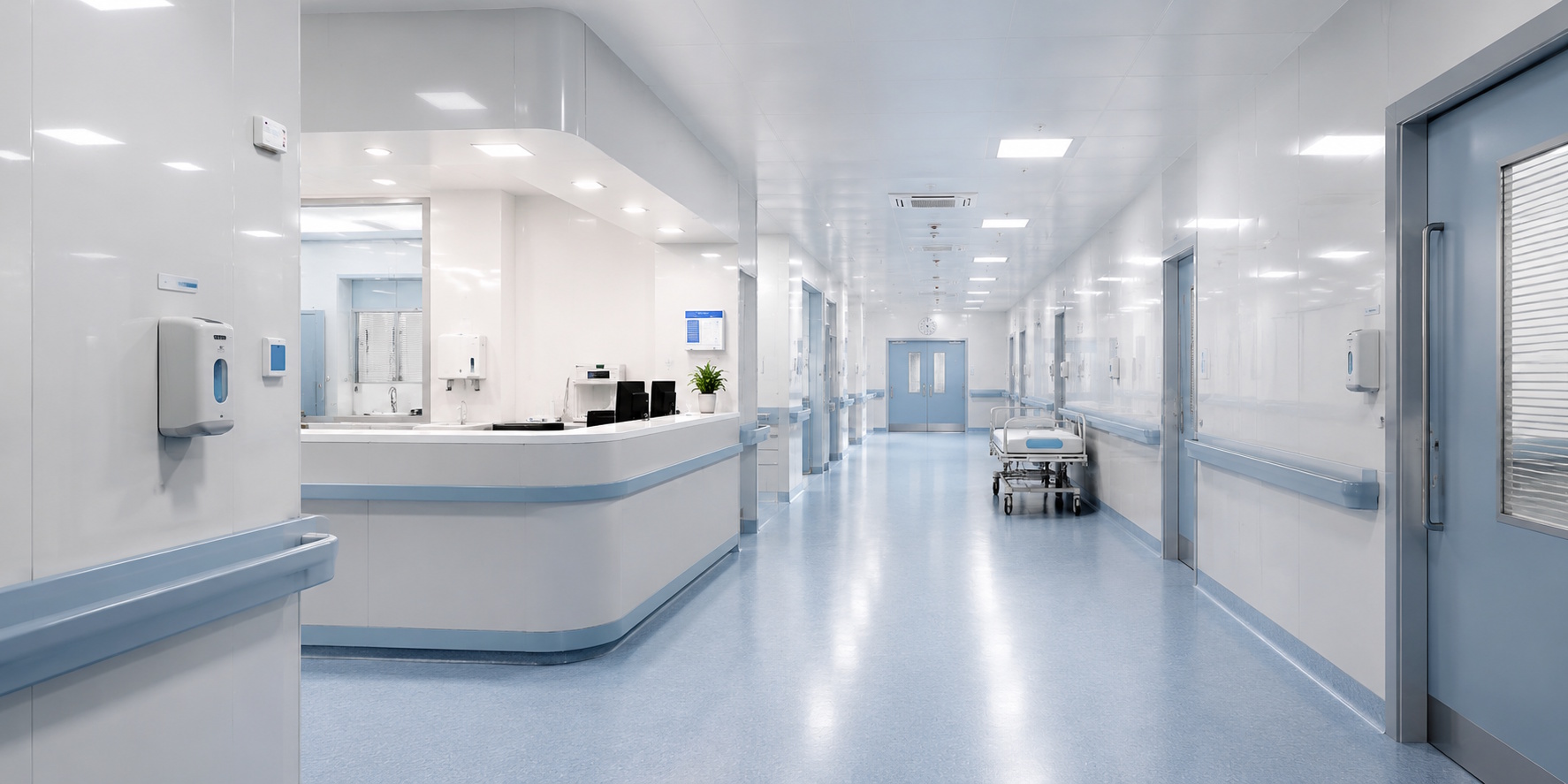
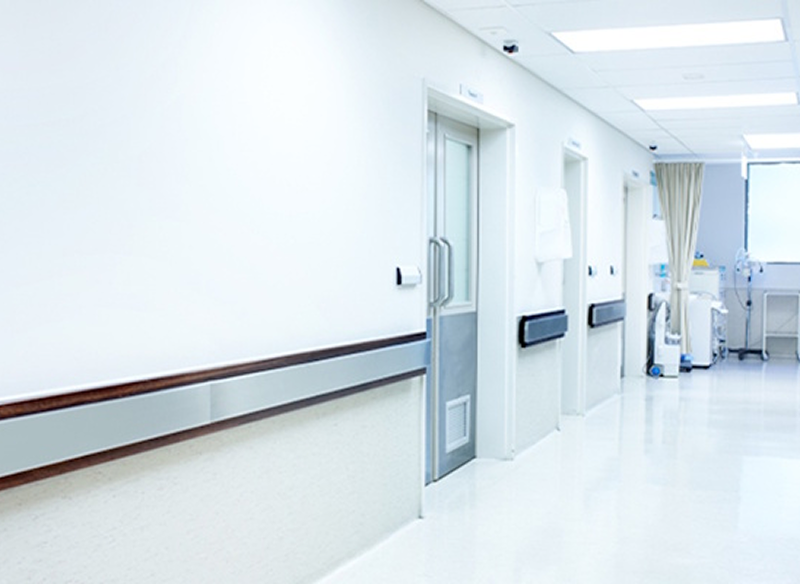
Yes, suitable healthcare wall cladding panels can be considered for high-traffic areas such as hospital corridors, emergency departments, patient areas, and spaces where beds, trolleys, and medical equipment move frequently. The panel should be selected according to the expected level of impact and wear.
9. Is antibacterial wall cladding for hospitals suitable for infection-sensitive areas?
Antibacterial wall cladding for hospitals can be considered for areas where bacterial growth on wall surfaces is a specific hygiene concern. However, healthcare facilities should review the product's technical data and testing and continue to follow their established cleaning, disinfection, and infection-control procedures.
10. What is cleanroom wall cladding for healthcare facilities?
Cleanroom wall cladding for healthcare is designed for controlled environments where surface cleanability, durability, joint detailing, and maintenance are particularly important. It can be considered for healthcare cleanrooms and other controlled areas based on the facility's specific environmental and performance requirements.
11. Is PVC wall cladding suitable for hospitals?
PVC wall cladding for hospitals can be considered where a durable, cleanable, and moisture-resistant wall surface is required. The selected PVC system should be evaluated for fire performance, chemical compatibility, impact resistance, temperature exposure, cleaning requirements, and suitability for the intended healthcare application.
Related Blogs
Explore updates and perspectives from KleenClad as we share what’s shaping cleaner, smarter spaces.
.png)